There is a subtle pressure in the air right now.
Pick a side.
Declare your position.
Clarify where you stand.
Silence is suspicious.
Nuance is weakness.
Complexity is inconvenient.
The world feels louder than it has ever been – not just in volume, but in certainty. Opinions sharpen. Lines harden. Labels multiply. And somewhere in the middle of it all, we forget something essential:
Before we are positions, we are people.
The Seduction of Sides
Choosing a side can feel powerful. It gives us identity. Belonging. Structure. It reduces complexity into something manageable. Sides promise safety — If I am here, and not there, then I know who I am.
But sides also narrow vision.
When we anchor our identity to a position, we begin to filter reality through loyalty instead of truth. We defend before we understand. We react before we listen. We argue before we feel.
And often, without realizing it, we trade our humanity for certainty.
Humanity Is Not Neutrality
Choosing humanity does not mean apathy.
It does not mean moral vagueness.
It does not mean refusing to stand for anything.
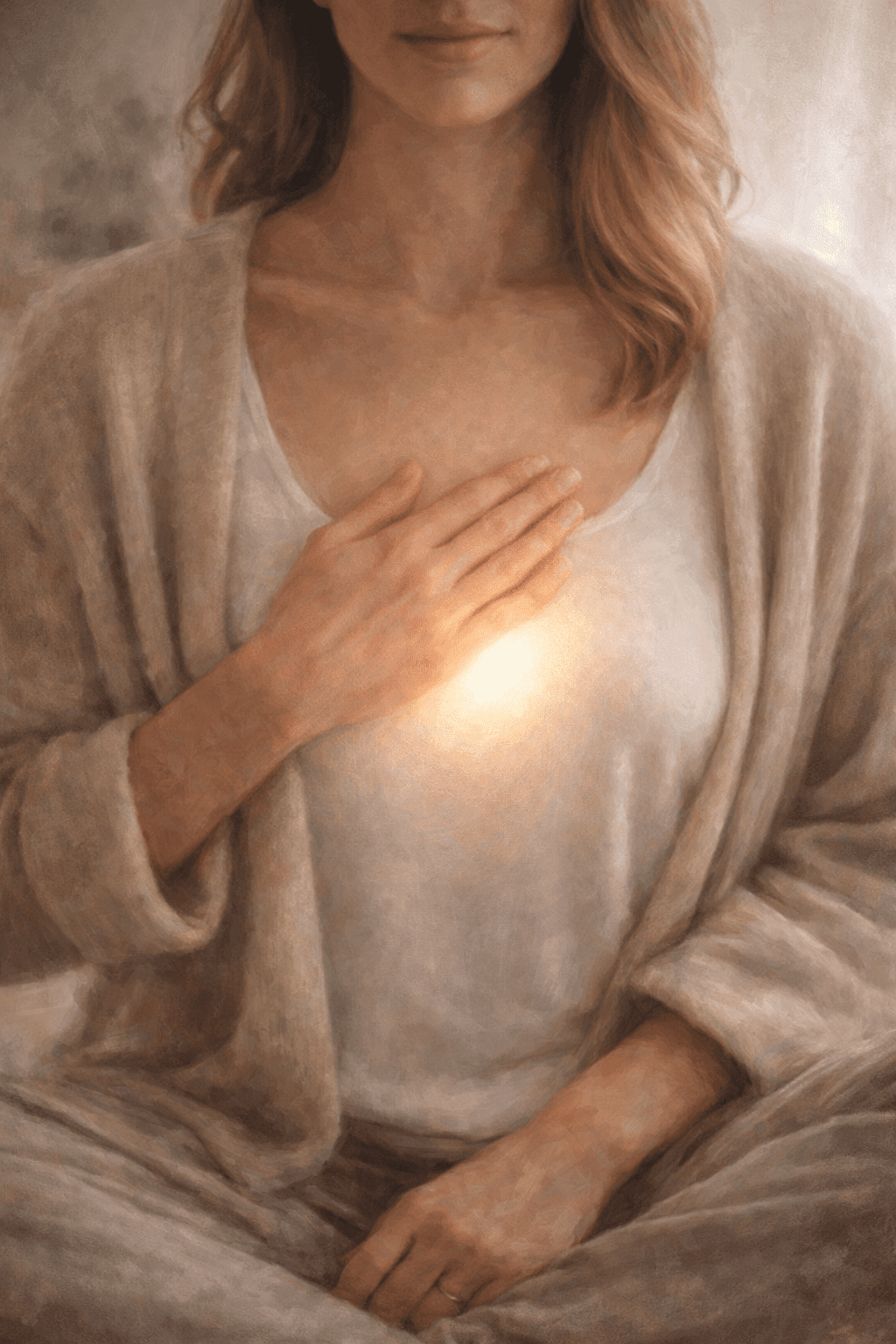
It means remembering that every stance sits inside a nervous system. Every opinion is shaped by experience. Every argument is carried by a human body that has known fear, love, loss, and longing.
Humanity is not the absence of conviction.
It is the presence of compassion.
You can care deeply.
You can hold strong values.
You can act with clarity.
And still refuse to dehumanize.
What Happens in the Body
When we are pushed to “pick a side,” the body often shifts into protection.
Shoulders tighten.
Breath shortens.
Jaw sets.
We move into fight-or-flight certainty.
But humanity lives in a different state.
It lives in a regulated system – one where curiosity is possible. Where we can listen without collapsing. Where we can speak without attacking. Where disagreement does not equal danger.
Choosing humanity is not just ideological.
It is physiological.
It is the choice to stay connected to ourselves while engaging with the world.
The Courage to Stay Open
It is easier to polarize than to humanize.
Polarization is quick. It gives us adrenaline and applause.
Humanity is slower. It asks us to tolerate discomfort.
It asks:
-
Can you hold your values without turning someone into a villain?
-
Can you disagree without diminishing?
-
Can you remain curious even when you feel activated?
This is not weakness.
This is nervous system maturity.
This is embodied strength.
The Return to What Matters
When everything feels divided, return to something simpler:
The person in front of you breathes.
So do you.
They have known grief.
So have you.
They want safety.
So do you.
Humanity is not about collapsing differences. It is about remembering shared existence beneath them.
We do not have to think alike to treat one another with dignity.
We do not have to agree to remain human.
I Choose Humanity
In a world that demands sides, I choose something deeper.
I choose:
-
dignity over dominance
-
understanding over assumption
-
connection over control
I choose to pause before reacting.
I choose to listen before labeling.
I choose to remember that every debate contains a beating heart.
Humanity is not passive.
It is active restraint.
Active compassion.
Active awareness.
It is the discipline of staying human when it would be easier not to.
And that is the side I stand on.
Reflection
Before you speak today, pause and ask:
-
Am I speaking from protection or from presence?
-
Is my nervous system braced?
-
Can I stay connected to myself while I stay connected to another?
You do not have to abandon your values to choose humanity.
But you may have to soften your armor.
And that softening might be the most powerful stand you ever take.
—
I Am – I Will.
I am human.
I will remain so.

0 Comments